Last updated on March 30th, 2026 at 05:21 pm
AI meaning is something almost everyone is curious about today. From smartphones to social media, from online shopping to smart assistants, Artificial Intelligence (AI) is everywhere. But what does it really mean? 🤔
Imagine a world where machines can think, learn, and make decisions like humans. Sounds futuristic, right? Well, that future is already here.
AI is not just a buzzword anymore — it’s shaping how we live, work, and communicate every single day. 🌍
In this complete guide, you’ll learn everything about AI meaning, its origin, types, uses, benefits, and real-life examples in a simple and engaging way. Let’s dive in! 🚀
What is AI Meaning? 🤖
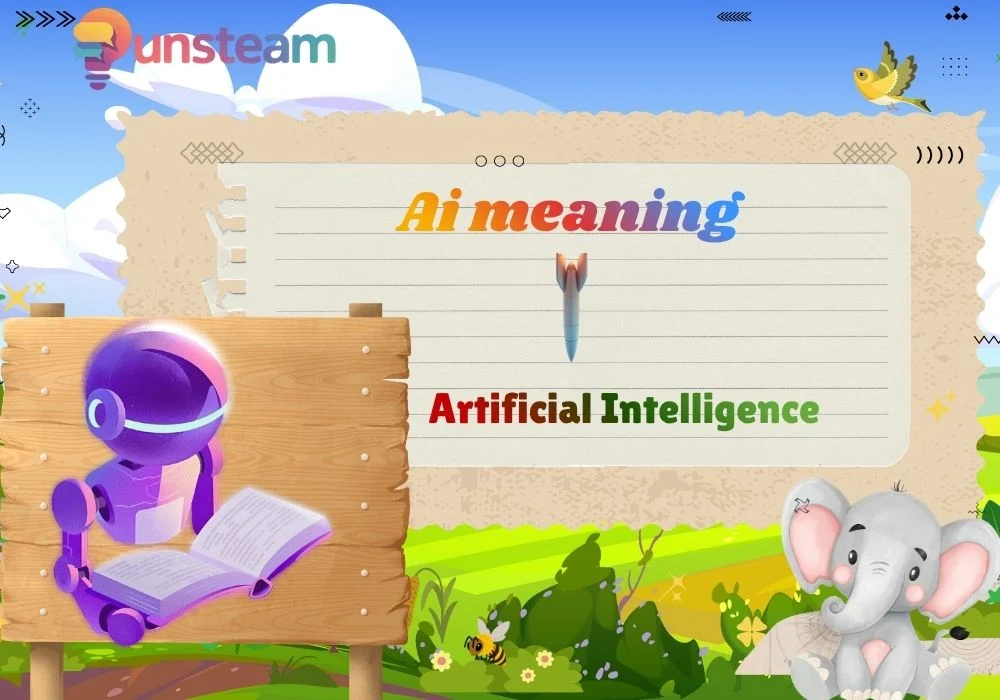
AI meaning stands for Artificial Intelligence. It refers to machines or systems designed to simulate human intelligence. These systems can learn from data, recognize patterns, solve problems, and even make decisions.
- Artificial = Made by humans
- Intelligence = Ability to learn and think
So, AI simply means machines that can think and learn like humans. 🧠
Origin / History of AI 🕰️
The idea of AI started long before modern computers existed. Scientists and thinkers imagined machines that could think like humans.
Key Milestones in AI Development
| Year | Event |
|---|---|
| 1950 | Concept of thinking machines introduced |
| 1956 | AI term officially introduced |
| 2000s | AI growth with internet and big data |
| 2020s | AI becomes part of daily life |
Today, AI is one of the most powerful technologies in the world. 🌐
How Does AI Work? ⚙️
AI works by using data, algorithms, and learning models. It analyzes information and improves over time.
- Data: Information used to train AI
- Algorithms: Rules AI follows
- Learning: AI improves with experience
AI does not just follow instructions — it learns from patterns and experiences.
Types of AI 🧩
1. Narrow AI
This type focuses on one task only.
- Voice assistants
- Recommendation systems
2. General AI
Can perform multiple tasks like humans. Still under development.
3. Super AI
Future concept where AI becomes smarter than humans. 🚀
Real-Life Examples of AI 🌍
AI is already part of your daily life:
- Smartphones: Face recognition 📱
- Social Media: Content suggestions
- Shopping: Product recommendations 🛒
- Healthcare: Disease detection 🏥
Benefits of AI 🌟
- Automation: Saves time and effort
- Accuracy: Reduces human error
- Speed: Faster decision-making
- Efficiency: Improves productivity
Disadvantages of AI ⚠️
- Job displacement
- High cost of development
- Dependence on machines
AI in Daily Life 💡
AI is used in:
- Education
- Healthcare
- Finance
- Transportation 🚗
AI vs Human Intelligence 🧠
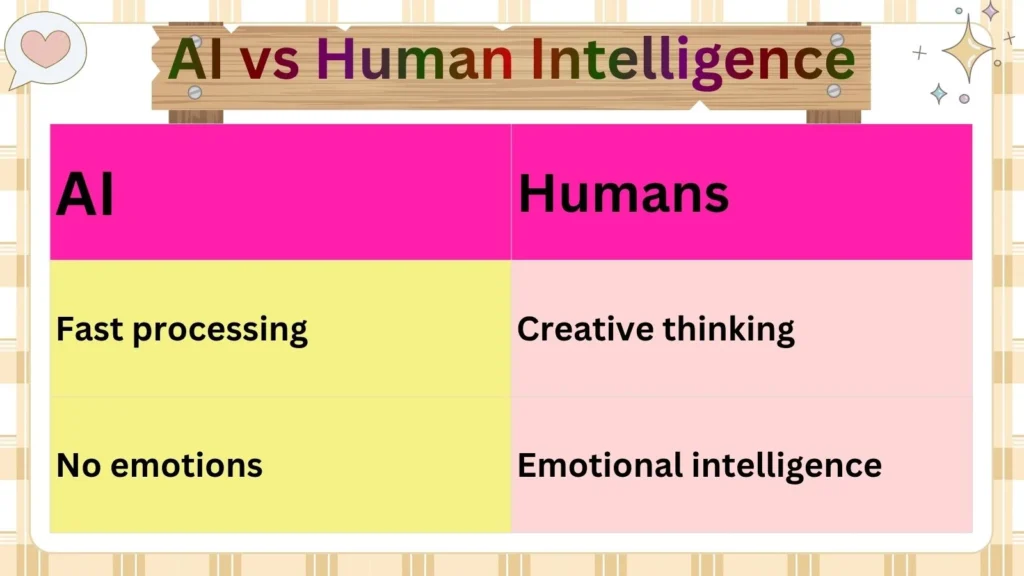
| AI | Humans |
|---|---|
| Fast processing | Creative thinking |
| No emotions | Emotional intelligence |
Future of AI 🔮
The future of AI looks promising. It will transform industries and improve lives.
- Smart cities
- Self-driving cars
- Advanced healthcare
Common Misconceptions About AI ❌
- AI will replace humans completely
- AI is always accurate
FAQs:
What is AI in simple words?
AI means machines that can think and learn like humans.
Where is AI used?
AI is used in phones, healthcare, education, and more.
Is AI dangerous?
AI can be risky if not used responsibly.
Can AI replace humans?
No, AI supports humans but cannot fully replace them.
Conclusion:
AI meaning is more than just a definition — it’s a revolution.
From simple tools to advanced systems, AI is transforming the world.
Understanding AI helps you stay ahead in today’s digital age. 🌍

I am Jonathon Dorofy and i am SEO content writer and meanings expert who specializes in internet slang, texting abbreviations, and modern language trends. He creates well-researched, easy-to-understand content that helps readers quickly learn the meaning of words, acronyms, and online expressions. With a strong focus on accuracy, user intent, and Google SEO best practices, Jonathon delivers trustworthy content designed to simplify digital communication for a global audience.