ADHD meaning refers to Attention Deficit Hyperactivity Disorder, a neurodevelopmental condition affecting millions worldwide.
From children to adults, ADHD can influence focus, behavior, and daily functioning. 🌟 In this guide, we’ll explore its origin, symptoms, real-life examples, and effective strategies for managing it.
Whether you’re seeking personal insight or want to understand someone with ADHD, this article will provide expert, human-friendly explanations.
What is ADHD? 🤔
ADHD is a medical condition characterized by inattention, hyperactivity, and impulsivity. People with ADHD may struggle to focus on tasks, follow instructions, or control impulses, affecting academic, social, and professional life. 💡
Key Features of ADHD ⚡
- Inattention: Difficulty staying focused, easily distracted.
- Hyperactivity: Restlessness, excessive movement, fidgeting.
- Impulsivity: Acting without thinking, interrupting others, impatience.
Origin of ADHD 🏷️
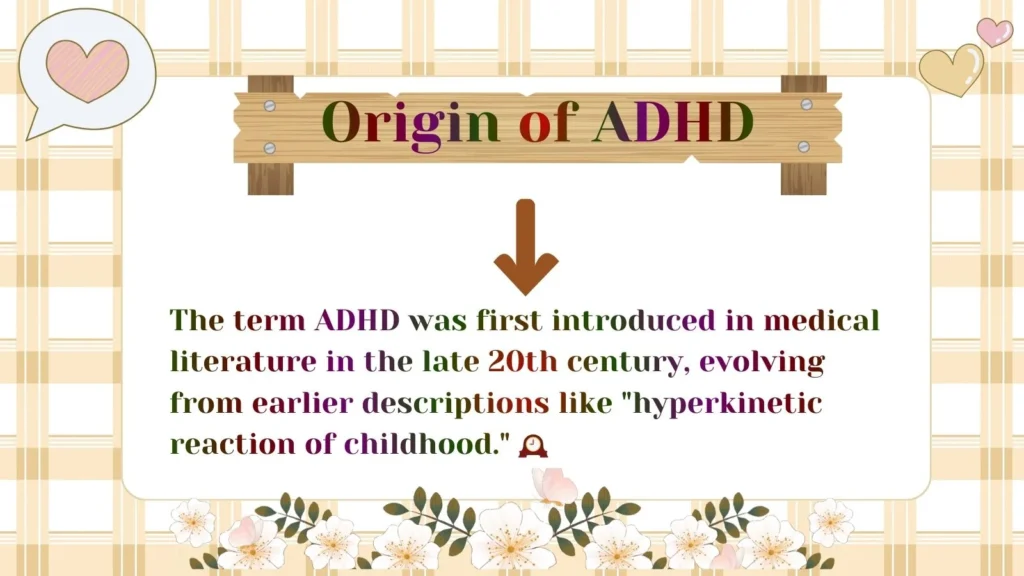
The term ADHD was first introduced in medical literature in the late 20th century, evolving from earlier descriptions like “hyperkinetic reaction of childhood.” 🕰️ Scientists and psychologists recognized the patterns of inattention and hyperactivity, leading to modern diagnostic criteria. ADHD is now widely accepted as a legitimate neurodevelopmental disorder.
Timeline of ADHD Recognition ⏳
| Year | Milestone |
|---|---|
| 1902 | Early descriptions of hyperactive children in medical literature |
| 1960s | Introduction of “hyperactivity” as a clinical term |
| 1980 | DSM-III formally recognizes ADHD |
| 1994 | DSM-IV establishes subtypes: inattentive, hyperactive-impulsive, combined |
| 2013 | DSM-5 updates criteria, including adult ADHD recognition |
Types of ADHD 🧩
ADHD is not one-size-fits-all. There are three main types, each with unique characteristics:
- Inattentive Type: Difficulty sustaining attention, forgetfulness, avoiding tasks.
- Hyperactive-Impulsive Type: Fidgeting, restlessness, impulsive actions.
- Combined Type: Mix of inattention, hyperactivity, and impulsivity.
Causes of ADHD 🧬
The exact cause of ADHD is complex, involving genetic, neurological, and environmental factors. ⚡ Some known contributors include:
- Genetics: ADHD often runs in families.
- Brain Structure & Function: Differences in neurotransmitter levels, prefrontal cortex activity.
- Environmental Factors: Premature birth, exposure to toxins, or early trauma.
Symptoms of ADHD 📋
Symptoms can vary by age and type. Common indicators include:
- Difficulty focusing on school or work tasks
- Restlessness or fidgeting
- Impulsive decisions without considering consequences
- Forgetfulness in daily routines
Diagnosing ADHD 🩺
ADHD diagnosis requires a comprehensive evaluation by qualified professionals. This usually includes:
- Behavioral assessments and questionnaires
- Observation over multiple settings (school, home, work)
- Ruling out other conditions that mimic ADHD
Treatment and Management of ADHD 💊
While ADHD cannot be cured, effective management strategies exist:
- Medication: Stimulants and non-stimulants prescribed to improve focus and control impulses
- Behavioral Therapy: Helps develop coping strategies and organizational skills
- Lifestyle Adjustments: Regular exercise, structured routines, sleep hygiene
- Educational Support: Individualized learning plans, classroom accommodations
Practical Tips for Daily Life 🏡
- Break tasks into small steps to reduce overwhelm
- Use reminders on phones, calendars, or sticky notes
- Create a structured environment with designated workspaces
- Practice mindfulness to improve focus and self-regulation 🧘♂️
Living Successfully with ADHD 🌟
ADHD is not a limitation—it’s a different way of thinking. Many individuals with ADHD excel in creativity, problem-solving, and innovation. ✅ With the right support and strategies, ADHD can be managed successfully, leading to fulfilling personal and professional lives.
Famous Examples ✨
- Entrepreneurs, artists, and innovators often credit ADHD for their unique perspective
- ADHD individuals frequently display high energy, curiosity, and creativity
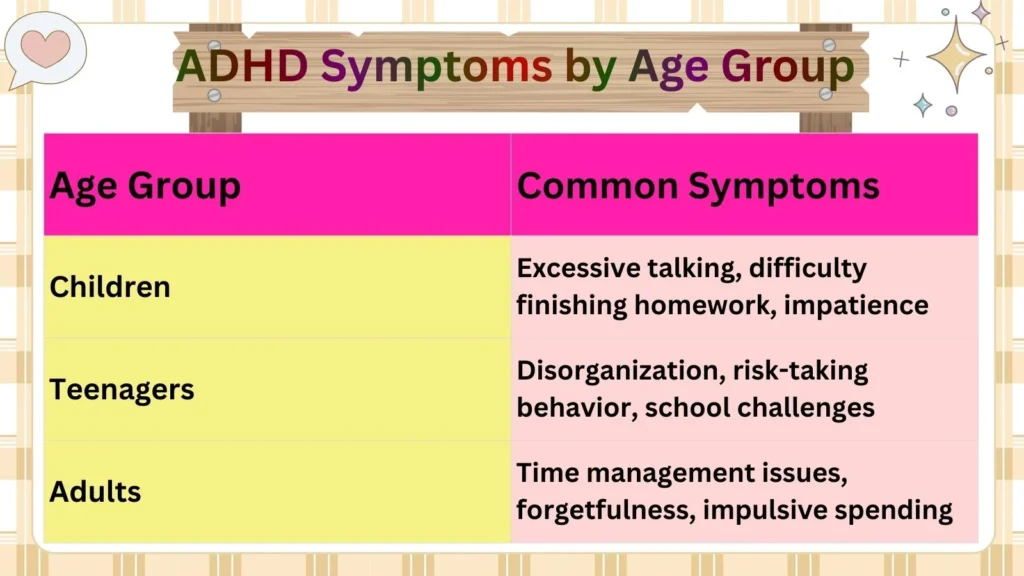
ADHD Symptoms by Age Group 🧒👩🦰
| Age Group | Common Symptoms |
|---|---|
| Children | Excessive talking, difficulty finishing homework, impatience |
| Teenagers | Disorganization, risk-taking behavior, school challenges |
| Adults | Time management issues, forgetfulness, impulsive spending |
Common Misconceptions About ADHD ❌
- ADHD is not caused by poor parenting
- It’s not just “hyperactivity”—inattention is equally important
- Adults can have ADHD, not just children
FAQs:
1. What does ADHD stand for?
ADHD stands for Attention Deficit Hyperactivity Disorder, a neurodevelopmental condition affecting focus, behavior, and impulse control.
2. Can adults have ADHD?
Yes, ADHD affects both children and adults, though symptoms may present differently in adulthood.
3. How is ADHD diagnosed?
Diagnosis involves behavioral assessments, observations, and professional evaluation to rule out similar conditions.
4. Is ADHD curable?
ADHD cannot be cured, but effective treatments and management strategies help individuals thrive.
5. What are practical strategies to manage ADHD?
Medication, therapy, structured routines, reminders, mindfulness, and educational support are all effective ways to manage ADHD daily. 🌟
Conclusion:
ADHD meaning is more than just a medical term. It represents a neurodevelopmental condition that requires understanding, support, and proper management.
With the right strategies, individuals with ADHD can lead successful, fulfilling lives, leveraging their unique strengths and creativity. 💡

I am Jonathon Dorofy and i am SEO content writer and meanings expert who specializes in internet slang, texting abbreviations, and modern language trends. He creates well-researched, easy-to-understand content that helps readers quickly learn the meaning of words, acronyms, and online expressions. With a strong focus on accuracy, user intent, and Google SEO best practices, Jonathon delivers trustworthy content designed to simplify digital communication for a global audience.